
Treatment Technology
3D- CRT
3D Conformal Radiation Therapy
Radiation therapy, also called radiotherapy, is a kind of cancer treatment that uses precise, high-energy beams to kill cancer cells. These energy beams are delivered from a machine outside of the body in short weekday treatments, usually 10-15 minutes in length, over a period of several months.
3D Conformal Radiation Therapy, sometimes called 3D-CRT, is one of several types of treatments available to you at our Indiana cancer care centers. 3D-CRT is similar to Intensity Modulated Radiation Therapy (IMRT) in that it shapes (or conforms) the radiation beams to match the shape of the tumor. This allows your oncology specialist to efficiently focus the radiation on the tumor to minimize damage to surrounding healthy organs.
3D Conformal Radiation Therapy is unique in that it utilizes recent advances in computer technology, CT scans and MRI scans to create detailed, three-dimensional representations of the tumor and surrounding organs.
The treatment team uses the patient’s 3D dataset and images to shape the radiation beams to match the size and shape of the tumor. This shaping is accomplished using multileaf collimators, or custom fabricated heavy metal blocks inserted between the beam and the patient. Nearby normal tissue receives less radiation exposure because the radiation beams are targeted directly at the tumor.
If you and your radiation team decide that 3D-CRT is right for you, the first step is capturing the images that will make up your 3D dataset. Your first appointments will involve advanced imaging and scans to take detailed pictures of the cancer and surrounding area, and can include CT scans, MRI imaging, or PET scans. Your radiation therapy professionals will then use these images to plan the course of your radiation treatment, in order to precisely deliver the best dosage to the target areas.
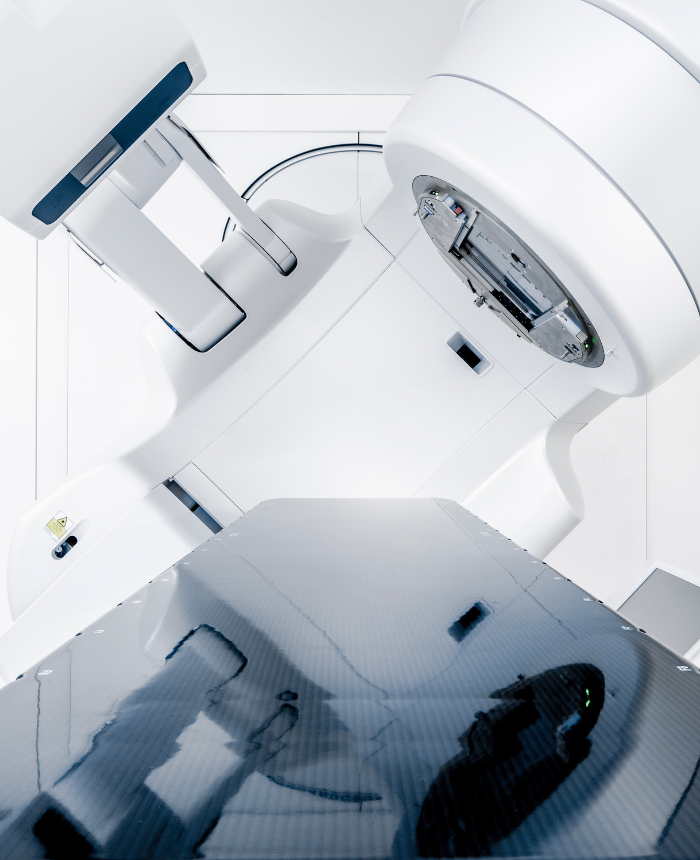
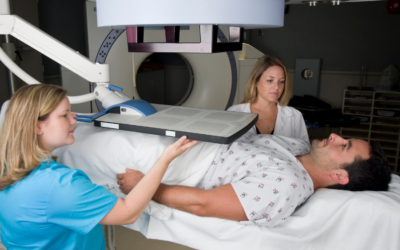
After the initial imaging, each 3D Conformal Radiation Therapy appointment will be very similar. You will be carefully positioned by your radiation oncologist on a flat platform and asked to remain still while a machine rotates around you to deliver radiation beams at very specific angles and shapes. Your radiation oncologist may make use of molds in order to make it easier and more comfortable for you to lie still in the necessary position.
Although the radiation has to pass through healthy tissue in order to reach the tumor, the highest dose of radiation is precisely delivered to the cancer itself with the help of a computer-optimized program that controls the direction and shape of each radiation beam. While the machine may making whirring or beeping noises as it moves, there will be little indication of anything else happening, as patients cannot feel the radiation beams. Instead, the treatment is generally painless and quick, with patients remaining aware throughout the appointment.
3D-CRT Patient Resources
Here are some resources to help you better understand your treatment; how to prepare for treatment; and what to expect before, during, and after treatment occurs.

How Long Does a Radiation Treatment Take?
How long does a single radiation treatment will take? It depends. Here, we’ll provide some answers that we hope will help prepare you for your radiation therapy journey.

How Radiation Oncology Centers Treat Prostate Cancer
Prostate cancer can be treated by radiation oncology centers using external beam radiation therapy (EBRT) or internal radiation (brachytherapy). Learn more here.
How IMRT for Prostate Cancer Helps Prevent Cancer Spread
Using IMRT for prostate cancer treatment kills cancer cells and helps stop the spread of cancer—improving a patient’s overall prognosis.
FAQs
3D Conformal Radiation Therapy vs IMRT… what is the difference?
These two radiation therapy treatments are very similar! IMRT, or Intensity Modulated Radiotherapy, is an advanced form of 3D-CRT that allows your radiation oncologist to not only shape the beams, but also to vary their intensity during your treatment. Both treatments require intensive imaging and planning in order for your radiation oncologist–with the help of state-of-the-art computer technologies–to determine the number and angles of beams to be used throughout the treatment. Your radiation oncology team will discuss which treatment is best based on your tumor size, location, and shape, among other considerations.
Why is 3D-CRT used for prostate cancer?
The precise three dimensional mapping of 3D-CRT is incredibly useful for shaping radiation therapy beams to attack only cancerous cells and mitigate damage to surrounding normal tissues and organs around the prostate, including the bladder, rectum, or penile bulb.
What does “conformal“ mean?
“Conformal” (adj.) is defined as preserving the correct angles between directions within small areas. Conformal radiotherapy describes a treatment in which a high radiation dose is shaped to precisely conform to the treatment area. Because conformal radiotherapy is very exact, it is important for patients to be positioned very particularly and remain immobile during treatment in order to both deliver the radiation to the target area and minimize damage to healthy tissue.
What are the advantages and disadvantages of 3D-CRT?
The advantages of 3D-CRT over standard radiotherapy is that the 3D mapping and imaging makes irradiating affected areas more precise, and shaping the radiation beam to match the three-dimensional shape of the tumor allows your radiation therapy team to use a higher radiation dose while still reducing side effects.
There are some possible side effects to 3D-CRT, but they are often localized to the area of the body being treated, and not all patients treated with 3D-CRT experience side effects. You may notice some skin changes in the area exposed to radiation, including it becoming red and sensitive, as if you have had a sunburn. You might also experience a slight darkening or thickening of the skin, hair loss at the treatment site, and ongoing fatigue. Radiation may also affect the lymph nodes around your prostate gland, or affect the bowel and bladder. Problems like these usually go away with time, but it is important to note them for your radiation therapy team.
How does 3D-CRT work?
3D-CRT is a type of external beam radiation therapy that directs high-energy beams into your body with a machine called a linear accelerator. These beams are used to damage the DNA of cancer cells, stop them from growing and spreading and, in many cases, shrink or eliminate tumors completely. The experience of receiving a 3D-CRT treatment is described by many patients as similar to having an x-ray or CT scan.
3D-CRT involves conforming, or shaping, the beams to match the tumor. There are two ways of shaping the radiation beams: cerrobend blocks or multileaf collimators. The cerrobend blocks are custom blocks molded into a specific shape, while the multileaf collimators are “leaves” within the machine made of skinny metal blocks that can be moved and adjusted quickly to form complex patterns and shape the beams for your treatment.
3D Conformal Radiation Therapy is an outpatient treatment, which means that you will be able to return home after each treatment. Usually, you will receive treatment daily on weekdays, allowing your healthy cells to recover during the weekends, for several weeks at a time.
You will regularly have imaging tests. This will allow your radiation team to see how the cancer is responding to treatment and adjust your treatment plan as needed.
How long has 3D-CRT been around?
3D-CRT has been in use since the 1980s, as CT scans became widely available and special computer technologies were developed to better model their scans into three dimensional images. Before 3D-CRT, radiation treatments matched only the width and height of the tumor, allowing for significant radiation dose to the surrounding tissue. With 3D-CRT, it is now possible to focus precisely on the target area, allowing radiation oncologists to use higher levels of radiation with fewer side effects, and making it more effective in shrinking and killing tumors.
Your Radiation Therapy Journey
Our team offers several radiation treatments for prostate cancer at both of our cancer centers. Click below to learn more about our cancer care technologies, see frequently asked questions about prostate cancer, discover resources and information to support you on your cancer journey, and find out what you can expect from treatment.
Technologies
Learn More about our cancer care technologies
We offer 3D-CRT, CT Scanning & Simulation, IGRT, IMRT, and Cone Beam CT.
Resources
Frequently Asked Questions
Have a question about prostate cancer? We've got answers.

Support
Cancer Survivorship & Support
Resources and information on cancer survivorship and support groups.

Patient Information
What to Expect from Treatment
Here's what you can expect before, during, and after your radiation therapy treatment.

Prostate Cancer Scans
At Integrated Cancer Care, we are committed to delivering the highest quality patient care to our prostate cancer patients.
If you or a loved one have recently been diagnosed with prostate cancer, you will likely have questions about treatment and what to expect. You may also want to know more about the diagnosis process.
Prostate cancer diagnosis and treatment usually incorporate various scans in order to find and effectively destroy cancerous cells, as well as monitoring for recurrence. The best scan for prostate cancer in your case will depend on your personal circumstances and what you and your doctor have agreed on, but there are some common approaches.
At Integrated Cancer Care, we offer the highest quality radiation therapy for prostate cancer through a comprehensive and multi-disciplinary approach designed to enhance clinical outcomes where possible. Integrated Cancer Care’s board-certified radiation oncologists, Dr. Tracy R. Price and Dr. Christopher Watson, provide on-site radiation oncology services for prostate cancer patients using proven technologies.
Schedule Your Appointment Today
If you are referred to radiation therapy during your cancer care, you get to choose where to receive treatment. We are here to support and encourage you—call us today to schedule your first appointment at our radiation oncology center nearest you.