
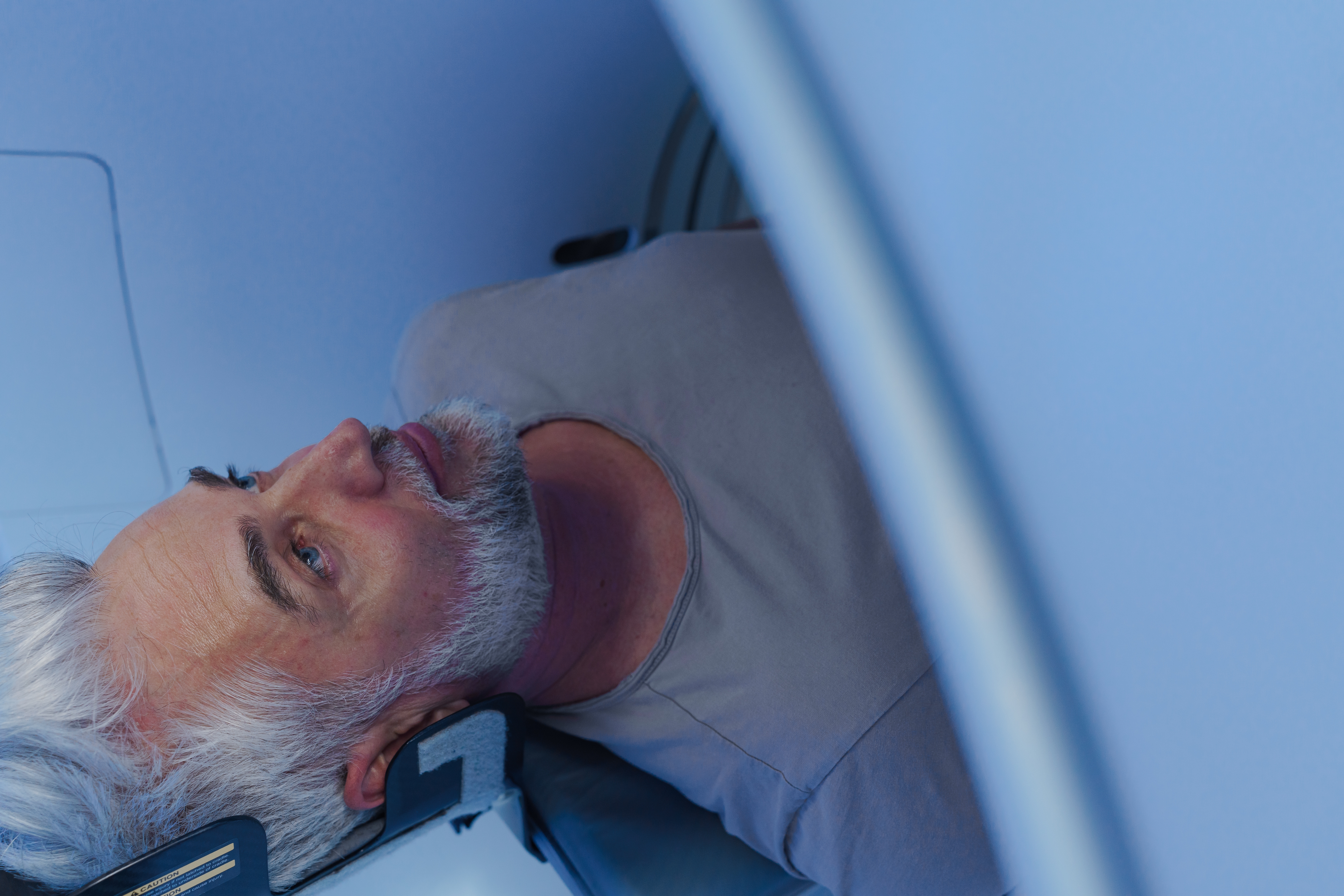
CT simulation, also called CT sim or CT simulator radiotherapy, is an important part of radiation therapy. This information-gathering stage ensures that the therapy hits the correct treatment targets and helps us come up with the most effective treatment plan for each patient.
Essentially, CT simulation involves collecting and using data to create a simulation so that each element can be fine-tuned for when the real treatment begins. This includes things like finding the right position for your body and determining the location and size of the tumor.
You may be familiar with CT scanning, a process that involves using physical devices to take detailed 3D images of the body. Doing a CT scan is part of CT simulation, which also includes using special software to evaluate those scans to determine the location and shape of the tumor that will be treated with radiotherapy.
When Does CT Sim Happen?
CT simulation is the second step when it comes to your radiation treatment.
At your first appointment, your radiation oncology team will ask you questions to get to know your situation. These might be questions about your past medical history, medications, allergies, and more. We’ll also discuss treatment options and answer any questions you have.
Imaging and simulation appointments come next. This is where CT sim happens. This process allows us to put together the information we’ve gathered to decide on the treatment plan that best suits your needs.
The third and final step is the radiation treatment itself. This usually begins 10-14 days after imaging is completed.
What Happens at a CT Sim Appointment?
During your CT simulation appointment, you will lie on a flat couch while your radiation oncology team takes measurements and marks your body where the low-level radiation will be applied. These marks may be temporary or permanent—your team will discuss what to expect before the simulation begins. The idea is to plan for the radiation to reach the affected areas while also protecting the healthy tissue nearby. We also want to make sure the process is as comfortable as possible for you.
Your team will then do a CT scan to create the images needed to complete the simulation. Effective CT sim makes it easy for your team to position you correctly before each treatment. The simulation process, which usually takes about 30-60 minutes, is painless, although you might hear clicking sounds as the machine works.
While bones can be easily imaged on x-ray, soft tissue may be more difficult to see during CT simulation. That means we may need to use contrast agents to help detect soft tissue. Contrast agents are usually given either orally or by injection, and they can have side effects. Be sure to let us know if you have abnormal kidney function or metal implants so that we can plan accordingly.
Treatment generally begins about 10-14 days after CT simulation.
Have Questions? Reach Out Today.
If you’ve recently been diagnosed, you probably have some questions about what to expect from treatment or the diagnosis process. Though there are some common approaches, the best treatment plan will depend on your personal circumstances and what you and your doctor have agreed on as the right course of action.
Our approach is multi-disciplinary and designed to enhance clinical outcomes where possible. Please don’t hesitate to reach out to us today with any questions you may have.